PCT Protocol Reference
A complete reference for post-cycle therapy, physiological rationale, standard SERM protocols, timing by ester, recovery bloodwork targets, and when to seek medical care for failed recovery.
- Understand the physiological basis for PCT and why timing is critical
- Apply standard Tamoxifen and Clomiphene protocols correctly
- Calculate when to begin PCT based on the esters used in a cycle
- Interpret post-PCT bloodwork to confirm successful recovery
- Identify signs of failed recovery and know when medical care is required
On this page
The Physiological Basis for PCT
Every cycle of exogenous androgens suppresses the HPTA, the Hypothalamic-Pituitary-Testicular Axis, via negative feedback. When circulating androgens (and estradiol from aromatization) rise above physiological levels, the hypothalamus reduces GnRH pulsatility and the pituitary stops releasing LH and FSH. Without LH signalling, the Leydig cells of the testes stop producing testosterone. This suppression is the mechanistically inevitable consequence of exogenous hormone use.
The goal of PCT is to accelerate the restart of this axis after exogenous compounds have cleared, restoring endogenous testosterone production as quickly as possible and minimising the duration of the post-cycle low-testosterone window. Without PCT, the axis will eventually restart on its own, but the timeline for natural recovery, 3–6 months or longer depending on cycle characteristics, involves an extended period of low testosterone with associated effects: muscle loss, fat gain, mood disturbance, low libido, fatigue, and impaired metabolic function.
SERMs (Selective Estrogen Receptor Modulators), primarily Tamoxifen and Clomiphene, are the pharmacological tools of PCT. They work by competitively blocking oestrogen receptors in the hypothalamus and pituitary, removing the oestrogen-mediated component of negative feedback and releasing the brake on GnRH and LH/FSH output.
Critical point on timing: PCT is only effective after exogenous androgens have substantially cleared. Starting a SERM while long-ester compounds are still circulating at suppressive levels achieves nothing, the androgen-receptor-mediated pathway of negative feedback remains active regardless of oestrogen receptor blockade. Timing PCT correctly is not optional; it is the most commonly mismanaged aspect of post-cycle recovery.
PCT Timing by Ester
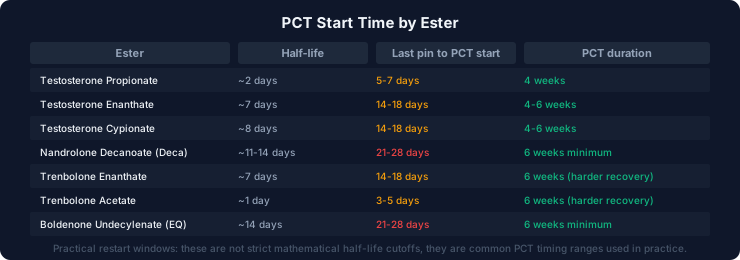
The correct window to begin PCT is approximately 2 half-lifes after the last injection, enough time for plasma levels to fall to roughly 25% of peak, which is generally below the threshold needed to maintain pituitary suppression.
| Cycle type | Last ester used | Wait before PCT | Notes |
|---|---|---|---|
| Short ester cycle | Testosterone Propionate | 3–5 days | Fast clearance; begin PCT within one week of last pin |
| Standard ester cycle | Testosterone Enanthate or Cypionate | 14–16 days | Most common scenario; two-week wait after last injection |
| Long ester cycle | Equipoise (Boldenone Undecylenate) | 21–28 days | Slow clearance; patience required |
| Nandrolone cycle | Nandrolone Decanoate | 21–28 days minimum | Long-acting ester plus deep suppression; frequently the limiting factor |
| Trenbolone Acetate | Trenbolone Acetate | 5–7 days | If stacked with Enanthate testosterone, the testosterone ester governs timing |
| Mixed ester stack | Longest ester in the stack | Governs all | PCT timing is always dictated by the compound with the longest clearance time |
Nandrolone Decanoate special consideration: Deca’s prolactin-elevating and deeply suppressive profile makes recovery more challenging than testosterone-only cycles. Many practitioners recommend a brief hCG bridge (500–1000 IU EOD for 10–14 days) starting 2 weeks after the last Deca injection and before PCT begins, to stimulate Leydig cell responsiveness before the SERM phase.
Standard PCT Protocols
Protocol 1: Tamoxifen (Nolvadex): Standard
Tamoxifen (Nolvadex) is the most widely used PCT agent and the one with the strongest evidence base for HPTA recovery in the context of AAS cessation.
Standard Tamoxifen PCT (weeks 1–6 post-clearance):
| Week | Dose |
|---|---|
| 1–2 | 40 mg/day |
| 3–4 | 20 mg/day |
| 5–6 | 10 mg/day (optional taper) |
Simplified 4-week protocol (adequate for most standard cycles):
| Week | Dose |
|---|---|
| 1–2 | 40 mg/day |
| 3–4 | 20 mg/day |
Longer cycles, more suppressive compounds (19-nors, Trenbolone), or older users may benefit from the extended 6-week protocol.
Mechanism: Tamoxifen blocks oestrogen receptors in the hypothalamus and pituitary, reducing negative feedback and allowing LH and FSH to rise. Rising LH stimulates Leydig cells to resume testosterone production. It does NOT block estradiol synthesis, oestrogen is still produced and circulating, which is important for bone density, lipid protection, and mood during recovery.
Known consideration: Some research suggests Tamoxifen may have partial agonist activity at pituitary oestrogen receptors that slightly limits its efficacy at increasing FSH compared to Clomiphene. That is one reason combined protocols are sometimes used for more challenging recovery scenarios.
Protocol 2: Clomiphene (Clomid): Standard
Clomiphene is a mixed SERM with both oestrogen antagonist and agonist properties depending on the tissue. At the hypothalamus and pituitary, it acts primarily as an antagonist, driving LH and FSH release.
Standard Clomiphene PCT:
| Week | Dose |
|---|---|
| 1–2 | 50 mg/day |
| 3–4 | 25 mg/day |
Key differences from Tamoxifen:
- Clomiphene is a stronger stimulator of FSH than Tamoxifen, making it particularly useful when spermatogenesis recovery is a priority.
- Clomiphene has a higher incidence of visual disturbances (blurred vision, floaters, light sensitivity), typically reversible, but any visual symptoms warrant immediate cessation.
- Clomiphene has documented mood-related side effects (depression, irritability) in some users, likely related to its partial agonist activity at brain oestrogen receptors.
- Higher doses of Clomiphene (100 mg/day) do not proportionally increase HPTA stimulation and substantially increase side effect risk, more is not better.
For users who tolerate Tamoxifen well, Tamoxifen is generally preferred as the sole agent due to its better side effect profile. Clomiphene is used when FSH recovery is specifically needed (fertility concerns), when Tamoxifen is unavailable, or in combined protocols.
Protocol 3: Combined Tamoxifen + Clomiphene
Combined SERM PCT is used when the cycle was long (20+ weeks) or used deeply suppressive compounds (Nandrolone, Trenbolone, Trestolone), when recovery from a previous cycle was slow or incomplete, when the user is older (>35) with less solid recovery capacity, or when fertility restoration is a specific goal.
Combined PCT protocol:
| Week | Tamoxifen | Clomiphene |
|---|---|---|
| 1–2 | 40 mg/day | 50 mg/day |
| 3–4 | 20 mg/day | 25 mg/day |
| 5–6 (optional) | 20 mg/day | , |
Rationale: Each SERM blocks oestrogen receptors via slightly different mechanisms. The combination produces greater LH and FSH stimulation than either alone, without proportionally increasing side effects, the dose of each agent is kept conservative.
hCG in PCT vs. pre-PCT: Human chorionic gonadotropin (hCG) mimics LH at the Leydig cell and is sometimes used in the 10–14 days before PCT begins (the clearance window) to prime the testes for response and reduce testicular atrophy. hCG is NOT typically used during the SERM phase, its ongoing exogenous LH-like signal can impair the natural recovery of endogenous LH production if used simultaneously.
AI Use During PCT
Aromasin (exemestane) is the only AI that may be considered during PCT, and only when Tamoxifen or Clomiphene is causing significant estradiol elevation (>60 pg/mL) with symptomatic gynecomastia.
Do NOT use Arimidex (anastrozole) or Letrozole routinely during PCT. These aromatase inhibitors aggressively suppress estradiol production. During recovery, some oestrogen is beneficial, it promotes LH receptor upregulation, protects lipid profile, supports bone density, and contributes to mood. Over-suppressing oestrogen during PCT slows recovery, worsens lipid markers, and does not prevent legitimate gynecomastia risks.
Recovery Bloodwork Targets
Bloodwork at 4–6 weeks post-PCT (8–12 weeks after last injection for typical cycles) should demonstrate:
| Marker | Target for successful recovery |
|---|---|
| Total testosterone | Within or above pre-cycle baseline range |
| LH | ≥ 2.0 IU/L (ideally approaching pre-cycle baseline) |
| FSH | ≥ 2.0 IU/L |
| Estradiol | Returning toward pre-cycle baseline (20–35 pg/mL) |
| Prolactin | Within normal range |
| Hematocrit | Trending back toward baseline |
| Lipids | Improving toward baseline (HDL recovery is typically slow, 2–4 months) |
Recovery timeline expectations:
- LH and FSH typically recover first, within 4–8 weeks of PCT start in responders
- Endogenous total testosterone follows LH/FSH, typically at baseline by 8–12 weeks post-PCT
- Lipid recovery is the slowest marker, HDL may not fully recover for 3–6 months post-cycle
- Spermatogenesis recovery lags behind testosterone production by 2–4 months
Signs of Failed Recovery and When to Seek Medical Care
Persistent or failed HPTA recovery is defined as inadequate return of hormonal function at 8–12 weeks post-PCT. Signs include total testosterone remaining below 300 ng/dL, LH remaining below 1.0 IU/L despite completion of a full SERM course, persistent symptoms (profound fatigue, depression, zero libido, inability to maintain muscle), or prolactin remaining elevated in the absence of ongoing 19-nor use.
| Finding | Action |
|---|---|
| Total T <300 at 12 weeks post-PCT, LH <1.0 | Endocrinology referral for secondary hypogonadism evaluation |
| Visual disturbances on Clomiphene | Stop Clomiphene immediately; switch to Tamoxifen only |
| Severe depression during or after PCT | Psychiatric evaluation; do not increase SERM doses |
| Prolactin >40 ng/mL persisting post-cycle | Rule out prolactinoma (MRI); consider ongoing Cabergoline |
| Testicular pain or swelling | Urological evaluation |
Failed recovery is a medical finding that requires professional evaluation. Self-escalating PCT beyond evidence-based protocols rarely resolves genuine hypogonadism and can worsen the situation. A sports medicine physician or endocrinologist willing to engage with harm-reduction contexts is the appropriate resource.
PCT Quick Reference Card
Before starting PCT, confirm:
- [ ] Last injection was ≥ 2 half-lifes ago for all compounds used
- [ ] Bloodwork confirms expected suppression pattern (low T, near-zero LH/FSH)
- [ ] No active compound still suppressing at significant circulating levels
- [ ] Oral compound hepatotoxin support course complete (if applicable)
Standard PCT for typical 12–16 week testosterone Enanthate/Cypionate cycle:
- Wait 14 days after last injection
- Tamoxifen 40/40/20/20 mg (4 weeks)
- Bloodwork at week 4 of PCT
- Bloodwork at 8 weeks post-PCT to confirm recovery
For challenging cycles (long, suppressive, multiple compounds):
- Optional: hCG 500 IU EOD for 10–14 days in clearance window before PCT begins
- Tamoxifen 40 mg + Clomiphene 50 mg for 2 weeks, then 20 mg + 25 mg for 2 weeks
- Extended monitoring to 12 weeks post-PCT
Selected references for major clinical, mechanistic, or protocol claims. Community-practice points may not be cited individually.