Injectable and Oral Compound Comparison Reference
Side-by-side reference tables for all major injectable and oral anabolic compounds, anabolic/androgenic ratios, aromatization, hepatotoxicity, progestogenic activity, dosing ranges, and experience-level guidance.
- Compare injectable compounds across key pharmacological properties in a single reference
- Compare oral compounds by hepatotoxicity grade, anabolic character, and clinical profile
- Distinguish wet vs. dry compounds and understand the practical implications
- Match compound profiles to appropriate experience levels and use cases
On this page
How to Read This Reference
The tables below compare compounds across standardised parameters to support informed decisions. A few definitional notes before diving in:
Anabolic:Androgenic (A:A) ratio is a relative scale derived from rat bioassay models comparing anabolic (tissue-building) activity to androgenic (masculinising, DHT-related) activity, with testosterone set at 100:100. These ratios are directionally useful but should not be over-interpreted, they are animal-model approximations and do not fully translate to human pharmacology. A compound with a high anabolic ratio is not simply “safer” than one with a lower ratio.
Aromatization indicates the degree to which a compound converts to estradiol via the aromatase enzyme. High aromatizers produce water retention, gynecomastia risk, and estrogen-related effects; non-aromatizers avoid these but also lose oestrogen’s cardioprotective lipid benefits.
Progestogenic activity indicates affinity for progesterone receptors. Relevant to prolactin-mediated gynecomastia and sexual side effects in 19-nor compounds (Nandrolone, Trenbolone).
Wet vs. dry is a practical colloquial classification. Wet compounds aromatize significantly or have progestogenic activity, causing water retention and a fuller appearance with higher gynecomastia risk. Dry compounds have minimal to no aromatization, produce little water retention, and create a harder, more defined appearance.
Injectable Compound Reference Table
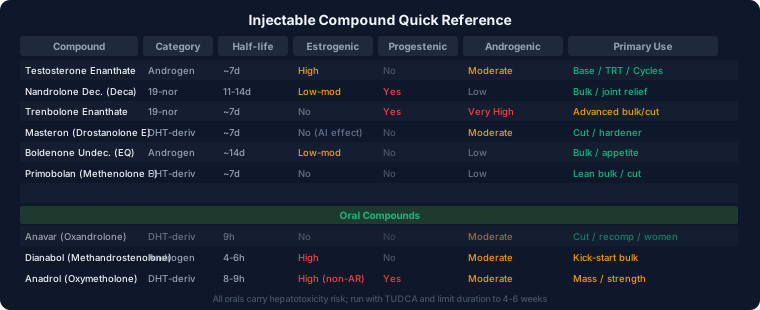
| Compound | A:A Ratio | Aromatization | Progestogenic | Typical dose range | Wet/Dry | Primary use case | Experience level |
|---|---|---|---|---|---|---|---|
| Testosterone (all esters) | 100:100 | High | None | 200–600 mg/wk | Wet | Foundation of nearly all cycles; mass, strength, TRT | Beginner+ |
| Nandrolone Decanoate (Deca) | 125:37 | Low | Moderate | 200–400 mg/wk | Wet | Muscle mass, joint support, therapeutic use | Intermediate |
| Nandrolone Phenylpropionate (NPP) | 125:37 | Low | Moderate | 200–400 mg/wk | Wet | Same as Deca with faster clearance | Intermediate |
| Equipoise (Boldenone) | 100:50 | Moderate (slow) | None | 300–600 mg/wk | Moderate | Lean mass, appetite stimulation, endurance | Intermediate |
| Trenbolone Acetate | 500:500 | None | Low-moderate | 150–400 mg/wk | Dry | Advanced cutting/recomp; extreme potency | Advanced only |
| Trenbolone Enanthate | 500:500 | None | Low-moderate | 200–400 mg/wk | Dry | Same profile, slower clearance | Advanced only |
| Masteron Propionate | 62:25 | None | None | 300–500 mg/wk | Dry | Pre-contest hardening; SHBG reduction; no added estrogen or water | Intermediate+ |
| Masteron Enanthate | 62:25 | None | None | 300–500 mg/wk | Dry | Same profile, twice-weekly dosing | Intermediate+ |
| Primo (Methenolone Enanthate) | 88:44 | None | None | 300–600 mg/wk | Dry | Lean mass preservation; mild androgenic profile | Intermediate+ |
| Trestolone (MENT) | 650:2300+ | Very high | High | 10–50 mg/wk | Very wet | Research compound; extreme potency | Advanced/research |
| hGH (Human Growth Hormone) | N/A | N/A | None | 1–4 IU/day | , | Fat loss, recovery, collagen synthesis, anti-aging | Intermediate+ |
Injectable Side Effect Profile
| Compound | DHT conversion | Hair loss risk | Cardiovascular impact | Libido / sexual function | Suppression depth |
|---|---|---|---|---|---|
| Testosterone | Yes (to DHT) | Moderate (dose-dep.) | Moderate | Positive (dose-dep.) | Standard |
| Nandrolone | Converts to DHN (weak 5AR product) | Low | Moderate | Libido depression common | Deep |
| Equipoise | Minimal | Low-moderate | Moderate | Mild positive | Moderate |
| Trenbolone | No (5AR non-substrate) | High | High | Variable (can be negative) | Deep |
| Masteron | Is a DHT derivative | Moderate-high | Mild-moderate | Mild positive (via SHBG) | Moderate |
| Primo | Minimal | Low | Mild | Mild positive | Moderate |
| Trestolone | No | Low-moderate | Potentially very high | Variable | Very deep |
| hGH | N/A | None | Mild (dose-dep.) | Indirect positive | None (peptide) |
Oral Compound Reference Table
| Compound | A:A Ratio | 17-aa | Hepatotoxic grade | Aromatization | Typical dose | Max duration | Primary use case |
|---|---|---|---|---|---|---|---|
| Dianabol (Methandrostenolone) | 210:60 | Yes | High | Moderate | 20–50 mg/day | 6 weeks | Mass/strength kickstart |
| Anadrol (Oxymetholone) | 320:45 | Yes | Very high | Minimal (estrogenic via other mechanism) | 25–100 mg/day | 4–6 weeks | Rapid mass accumulation |
| Anavar (Oxandrolone) | 400:24 | Yes | Low-moderate | None | 20–80 mg/day | 8–12 weeks | Lean mass, strength, female use |
| Winstrol (Stanozolol) oral | 320:30 | Yes | Moderate-high | None | 25–50 mg/day | 6 weeks | Pre-contest cutting; strength |
| Turinabol | 54:6 | Yes | Moderate | None | 20–60 mg/day | 6–8 weeks | Lean gains; low androgenic profile |
| Halotestin (Fluoxymesterone) | 1900:850 | Yes | Extreme | None | 5–20 mg/day | 4 weeks max | Strength only; powerlifting/combat |
| Superdrol (Methasterone) | 400:20 | Yes | Very high | None | 10–20 mg/day | 4 weeks | Rapid lean mass; high toxicity |
| Epistane | ~350:90 | Yes | Moderate-high | Minimal | 20–40 mg/day | 4–6 weeks | Lean gains; anti-estrogenic |
| 1-Testosterone | ~200:100 | Typically no | Low (when non-17aa) | None | 100–200 mg/day | 6–8 weeks | Lean mass; dry; unusual oral profile |
| Mesterolone (Proviron) | 150:40 | No (1-methylated) | Low | None | 25–75 mg/day | Extended (low toxicity) | SHBG reduction; libido support; mild AI effect |
Oral Compound Hepatotoxicity Grading
| Grade | Description | Compounds |
|---|---|---|
| Extreme | Expected severe enzyme elevation; peliosis hepatis, hepatic adenoma, cholestasis documented | Halotestin, Anadrol at high dose |
| Very High | Consistent significant elevation; risk of cholestatic jaundice; never stack with other hepatotoxins | Anadrol, Superdrol |
| High | Significant elevation expected; TUDCA mandatory; cycle duration strictly limited | Dianabol, Winstrol |
| Moderate-High | Clinically meaningful hepatic impact; TUDCA recommended; careful duration management | Winstrol, Epistane, Turinabol |
| Moderate | Elevation common at higher doses; manageable with support and duration limits | Anavar at doses >60 mg/day |
| Low | Minimal hepatic impact at typical doses; TUDCA still sensible | Anavar at 20–40 mg/day, Mesterolone |
Note: TUDCA 250–500 mg/day alongside any 17-alpha-alkylated oral compound reduces hepatocellular stress and has genuine clinical evidence for reducing compound-induced enzyme elevation and hepatocyte apoptosis.
Wet vs. Dry: Practical Implications
Wet Compounds
Testosterone, Dianabol, Anadrol, Nandrolone, Equipoise, Trestolone.
Implications: Water retention creates temporary scale weight increases that mislead progress assessment. Estradiol management via AI is usually required to prevent gynecomastia. The water retained on cycle is lost post-cycle, making apparent on-cycle scale gains partially non-permanent. Cardiovascular strain from plasma volume expansion adds to cardiac workload.
Dry Compounds
Trenbolone, Masteron, Primo, Anavar, Winstrol, Turinabol, Halotestin, Superdrol.
Implications: Gains retained post-cycle are predominantly actual lean tissue rather than water. No AI required for oestrogen management. However, the absence of oestrogen’s cardioprotective effects can be a negative, very low-oestrogen environments (heavy Trenbolone with aggressive AI use) may accelerate atherogenesis. Joint pain and connective tissue dryness is a common complaint with certain dry compounds (Winstrol in particular).
Experience Level Guidelines
Beginner (First 1–2 Cycles)
Appropriate: Testosterone Enanthate or Cypionate as the sole compound is the universal recommendation. Anavar as an optional oral addition at conservative doses (20–40 mg/day) for those specifically pursuing lean gains. Female beginners may use Anavar as a sole compound.
Rationale: First cycles establish baseline response to exogenous androgens and produce the most gains available from the simplest protocol. The majority of first-cycle gains come from enhanced protein synthesis and nitrogen retention at any testosterone dose above natural levels. Adding complexity before understanding individual testosterone response is poor risk management.
Intermediate (3–5 Cycles, Reliable Bloodwork History)
Appropriate additions: Nandrolone (at doses lower than testosterone, with prolactin monitoring); Equipoise (accounting for slow saturation timeline); Masteron or Primo for leaning phases; oral kickstarts, Dianabol (4–6 weeks, liver support mandatory); oral finishers, Anavar, Turinabol, Winstrol (with liver support and bloodwork).
Advanced (Extensive Cycle History, Comprehensive Bloodwork, Medical Support)
Considered only with full awareness of compound-specific risks:
- Trenbolone, highest harm floor of any common injectable; requires established bloodwork baseline and awareness of neurological and cardiovascular signals; Acetate ester strongly preferred over Enanthate for rapid clearance if side effects emerge
- Halotestin, extreme hepatotoxicity; sole use case is acute strength; maximum 4 weeks at lowest effective dose
- Superdrol, very high toxicity, severe lipid impact; only in users with well-monitored liver and cardiovascular health
- Trestolone, research compound with limited human data; extremely potent aromatization requires heavy AI use and careful monitoring
Every additional compound multiplies interaction surface area, suppression depth, side effect management complexity, and bloodwork interpretation difficulty. Simplicity is efficiency.
Selected references for major clinical, mechanistic, or protocol claims. Community-practice points may not be cited individually.